
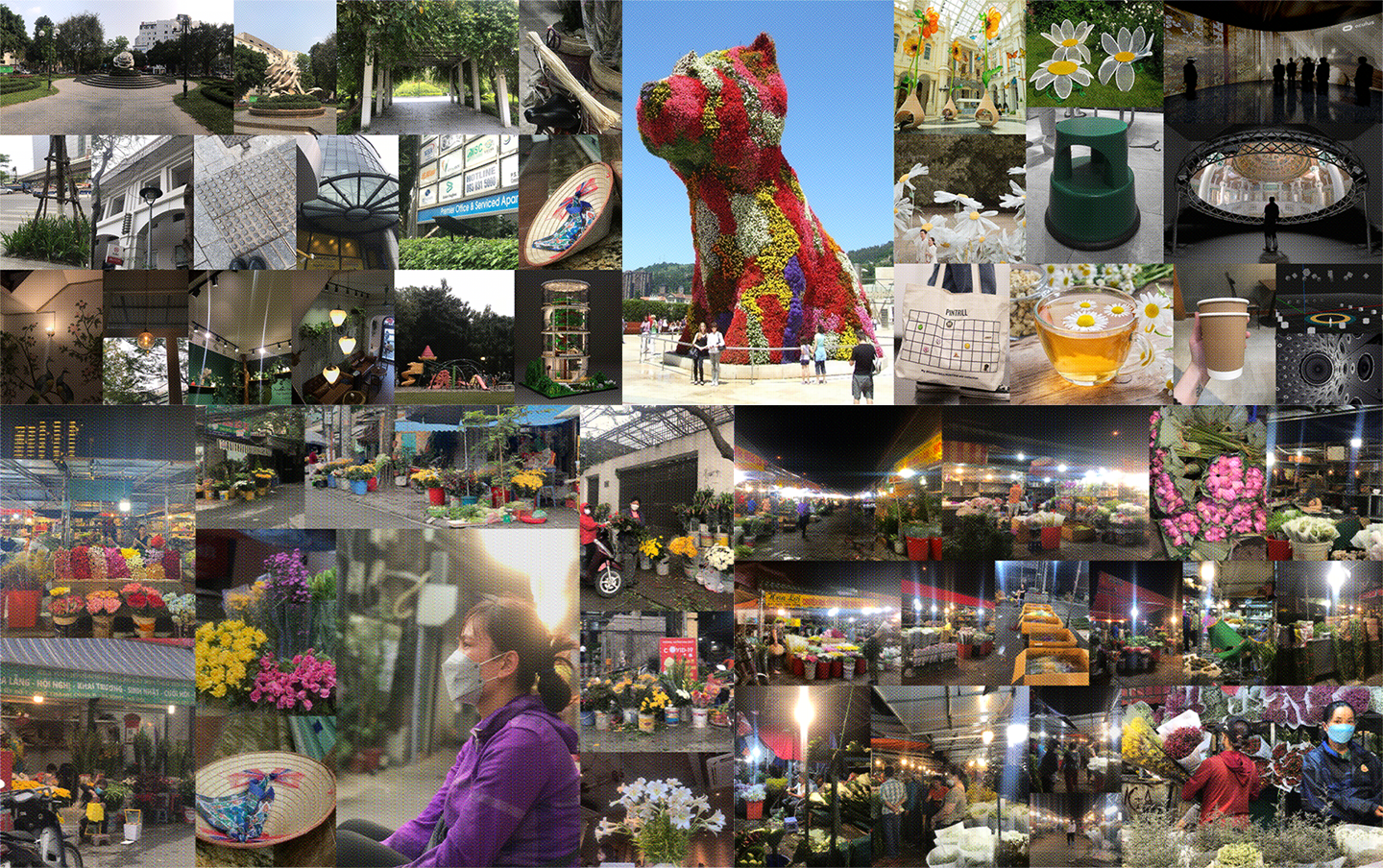
“Vườn” is an event aiming at embracing the rustic images of flower market traders - the ones who adorn the city scene with various colors from the “garden” growing surround them throughout many developing vicissitudes of Hanoi city. Besides the wish of raising awareness about the manual workers in general and the flower traders in particular, the author hopes the event can make participants more or less gradually pay more attention to the idyllic simple beauties that “colorize” their own daily lives.
How to define "Vườn"?
Museums in Vietnam are usually seen as a showcase and conservation location of historical values, and they have kept this approach ever since.
VNMH, as one of the traditional museums, brings to the public meaningful moments when exploring the whole picture of Vietnam’s history. However, the museum itself lacks interactive materials and does not appeal to the contemporary generations as much as some modern art displays or entertainment centers do. This rises from the fact that the museum only exhibits eras from the past without any significant up-to-date values belonging to the present. The project has the potential to shift the public’s perspective on the museum by exposing the big idea rising from the city's cultural traits at the present.
Wholesalers are present everywhere around the world and Hanoi is not an exception. In the capital city of Vietnam, small traders offer different kinds of goods, and flower is one of them. This kind of economy is heavily staffed and ubiquitous, with itinerant sellers who move from their farms in the rural areas to the city floral marketplaces to provide customers their goods — even without the “aesthetic appeal” of those shopkeepers versus their colorful flowers.
Modern supermarkets and shops sprang up, but rustic markets still exist and operate as a part of the culture and consumer habits for many generations, not only in Hanoi but also in other Vietnamese provinces.
Due to the outbreak of the Covid-19 epidemic recently, social distancing and stressful situations have led to many people deciding to quit growing flower farms - a challenging and precarious job at that moment - and switch to other professions for their own good. Recently, the “new normal” situation has brought back the hustle of trading activities. Flower markets on special occasions become significantly crowded, filled with various colors and bustle sounds.
Target audience was quite broad and involved a wide range, yet scaled down to:
In vs. Out
%402x.svg)